Orlando Roadside Assistance (407) 241-2139

Winch-Out in Orlando, FL

A wheel dropped off the pavement onto soft sand or a swale full of rain, and now the tires only spin. Call the line, tell the operator how far you are from the pavement, and a roadside truck pulls the car out with straps on the proper recovery points. You hear the quote and when a truck can reach you first.

Roadside Assistance Emergency LineOrlando, Florida

Answered 24 hours, 7 daysQuoted on the call

What moves the quote

  • Winch-outA stuck car pulled to firm ground

    Sugar sand or a flooded swale, how far to firm ground, the angle of the pull, room for the truck.

Have this ready when you call

  1. Where the car sits, and how many feet it is from solid pavement
  2. Which wheels are stuck and whether the car faces the road or away from it
  3. Whether water is rising around the car, and whether anyone is in it
(407) 241-2139

What do I do if my car is stuck in sugar sand in Orlando?

Stop spinning the wheels, since digging in makes the pull harder, and call for a winch-out. Central Florida's loose white sand has almost no grip, and a tire that spins deeper can bury the frame.

Sugar sand shows up on unpaved shoulders, at lake lots, along trail heads and at the edge of a new development. It holds a car on the surface until a tire turns, and then it flows away from the wheel. Letting air out of the tires can add grip for a driver with a gauge and a way to re-inflate, but with a roadside truck on the way it is better to wait. Keep the engine off if the car is tilted, check that the tailpipe is not buried, and note which way the car faces. Photos of the wheels help the operator choose the angle of the pull. A short, steady pull from firm ground is the usual recovery.
My car slid into a grass swale after an afternoon storm. Can it be pulled out?

Yes, a car in a grass swale is a common winch-out, and the operator pulls it up the slope in a straight line with straps. Wet grass over soft soil gives the tires nothing to grip.

Summer afternoon thunderstorms in Orlando soak the swales and drainage strips beside roads and parking lots fast. A tire that rides onto the grass edge to avoid a car or to pull over can sink to the axle. The ground may look solid and be a thin layer over mud. Tell the operator which side of the road you are on, how far the wheels are from the pavement, and whether the car sits on a slope. The operator checks the angle of the pull, because a pull from the side can scrape the car along the slope. If the swale is full of water, do not walk in it; the depth and what lies under it can be hidden. Wait until the storm moves on if lightning is overhead, and stay inside the car until then.

What if my car is near a retention pond bank or a lake lot in Orlando?

Stay out of the water and away from the edge, and call 911 first if the car is sliding toward the water or anyone is in danger. For a car that is stuck but stable, a winch-out can work.

Retention ponds sit beside many Orlando neighborhoods, shopping centers and roads, and some have steep, soft banks. Alligators live in Florida lakes and ponds, so keep clear of the waterline whether or not you can see one. If the car is on the bank and the wheels will not grip, do not try to rock it loose. Rocking can slide it closer to the edge. Exit on the side away from the water, move uphill and call. The operator will want to know the slope, the soil, how close the water is and whether the truck can set up on firm ground. A heavy pull near the edge may call for a different angle or a longer line, and the operator will say on the call if the site is not safe to work.

A street flooded during a summer storm and my car stalled. What now in Orlando?

Do not drive into water, and if your car stalled in it, do not restart the engine; call 911 if the water is rising or you cannot get out. Move to higher ground on foot if it is safe.

Heavy summer storms can leave standing water in underpasses, low intersections and neighborhood streets almost at once. It is hard to judge the depth, and a car can float or stall in a depth that looks shallow. If an engine takes in water when you restart it, the damage can be severe. A stalled car in water should be left off, with the key out of the ignition. Once the water drops, the operator can look at the situation. A winch-out helps if the car is stuck in mud or silt left behind, and a tow is the answer if the engine, the transmission or the electronics took on water. Take photos of the water line on the doors for your records. Do not wade through moving water, since it can knock a person off their feet.

Can a winch-out pull my car from a muddy yard or a construction lot in Orlando?

Yes, a muddy yard, a lawn or a construction lot is a standard winch-out, and the operator pulls toward firm ground in a straight line. Tell the operator what the ground is like around the car.

New construction around Lake Nona, Horizon West and east Orange County leaves bare soil that turns to slick clay after rain. A driveway that crosses a new lawn, a party in a yard or a job site where you stopped for a quick look can all end the same way. The truck needs a place to park on a solid surface, and a line that reaches the car. If a long pull is needed, the operator may use a snatch block to change the angle. Tell the operator whether a gate is locked, whether sprinklers are on, and whether there are pipes, septic lids or irrigation heads in the path. If the lawn belongs to someone else, contact the owner. Ruts left in a yard are the cost of a stuck car, so a short, controlled pull is better than wheelspin.

What does the operator need to know about my stuck car in Orlando?

The operator needs to know how far you are from pavement, the angle of the car, what is under the wheels and how much room a truck has to work. Photos make the quote more accurate.

Call (407) 241-2139 and describe the spot. How many feet to the road? Is the car nose up, nose down or sideways? Are all four wheels stuck or only one? Is it a front-drive car, a rear-drive car or all-wheel drive? Does the car have tow hooks or recovery points, and where? Is the road busy, and is there a driveway for the truck? Is the ground wet, sandy or full of rocks? With that picture, the operator can say whether a winch-out will work or whether the car needs a tow. Send a phone photo from the road side if you can, and one of the wheels. Keep people away from the line of the pull; anyone near the cable should stand clear.

When does a winch-out in Orlando turn into a tow?

A winch-out turns into a tow when the car is damaged, when a wheel or axle will not turn, or when the ground is too soft to put the car back on the road safely. The operator decides after looking at it.

Some stuck cars come out and drive away. Others have a bent wheel, a torn tire, a broken axle or a pan hanging low from the drop. After the pull, the operator looks at the wheels and under the car for leaks and loose parts. A tire damaged in the recovery is also a possibility, and the same line handles tire trouble; a flat after a pull can be changed at the spot with your spare, and the details are on the flat tire change page. If the car is sound, you drive off. If not, the operator loads the car on a flatbed for the shop you pick. A car that sits deep in wet clay with no firm ground nearby may need a flatbed to be built into the plan, too. The quote you hear first covers the pull; a tow is a second quote.

How does the operator protect my car during a winch-out in Orlando?

The operator hooks straps or chains to the proper recovery points on the frame and avoids bumpers, suspension parts and tie rods. A steady pull, not a jerk, protects the paint and the body.

Modern cars often have a small tow-eye or a threaded socket behind a cover in the bumper, and the owner's manual shows where. Many cars have no good front hook. The operator may use a wide strap around a frame member to spread the load, and padding at edges that could cut it. Pulling on a plastic bumper, a control arm or an exhaust pipe can crack or bend it, so those are avoided. Tell the operator about low front bumpers, aero skirts and aftermarket kits. Put the car in neutral and release the parking brake when asked, and keep the steering wheel straight. Stay out of the car unless the operator tells you to steer. Afterward, check the wheels, the bumper edges and the ground under the car for leaking fluid.

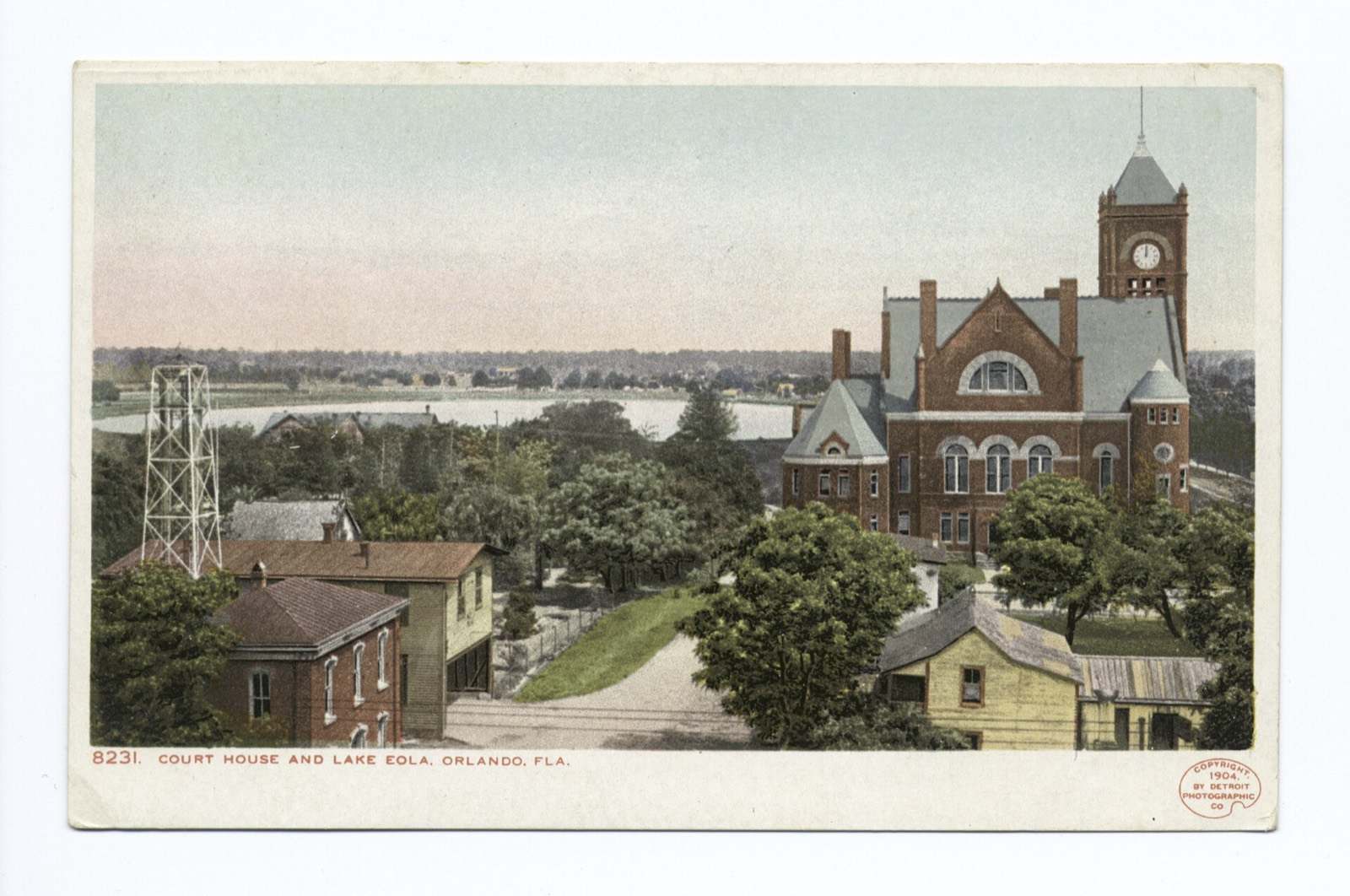
An early 1900s postcard of the Orange County courthouse with Lake Eola behind it
The Orange County courthouse and Lake Eola on a postcard from the early 1900s, when Orlando was a citrus town.

Where's the car?

Fill in the ticket and tap send. It goes to the local operator, who calls you back on the number you give. In a hurry? Call (407) 241-2139 instead.

On a highway, tap the road and your direction, then add the last exit or a cross street. That is enough for the operator to find you.

(407)241-2139

Breakdown ticketOrlando, FL

On a highway? Tap the road, then the direction
Call (407) 241-2139Text