Orlando Roadside Assistance (407) 241-2139

I-4 Breakdown in Orlando: What to Do Next

The car quits somewhere between Kirkman Road and Colonial Drive, the traffic does not slow down, and the shoulder is narrow. This guide covers what to do at the start, how the Express lanes and the toll roads change the answer, and when the call goes to 911, Road Rangers or this line.

Roadside Assistance Emergency LineOrlando, Florida

Answered 24 hours, 7 daysQuoted on the call

Have this ready when you call

  1. The road, your direction and the last exit or mile marker you passed
  2. The make, model and year, and whether you are on the shoulder, in a lane or in the Express lanes
  3. A photo of the problem, such as the tire, and whether anyone is hurt
(407) 241-2139

What do I do first when my car dies on I-4 in Orlando?

Get the car as far onto the right shoulder as it will roll, turn on the hazard lights and stay buckled in. Then call. If the car is stuck in a travel lane or anyone is hurt, call 911 before anything else.

I-4 through Orlando carries commuters, tourists and trucks at highway speed, and a stopped car is easy to miss in a summer downpour. Take your foot off the gas the moment the engine cuts and let the car coast toward the right shoulder. Steer with both hands, because power steering gets heavy once the engine is off. Switch on the hazards, put the car in park and set the parking brake. Stay in the seat with the belt on unless there is smoke or fire. Standing beside the car puts you next to moving traffic, so wait inside and make your calls from there. Leave only for smoke or fire, and then exit on the side away from the lanes and move well clear of the road. Once the car is stopped, work out your road, your direction and the last exit you passed.
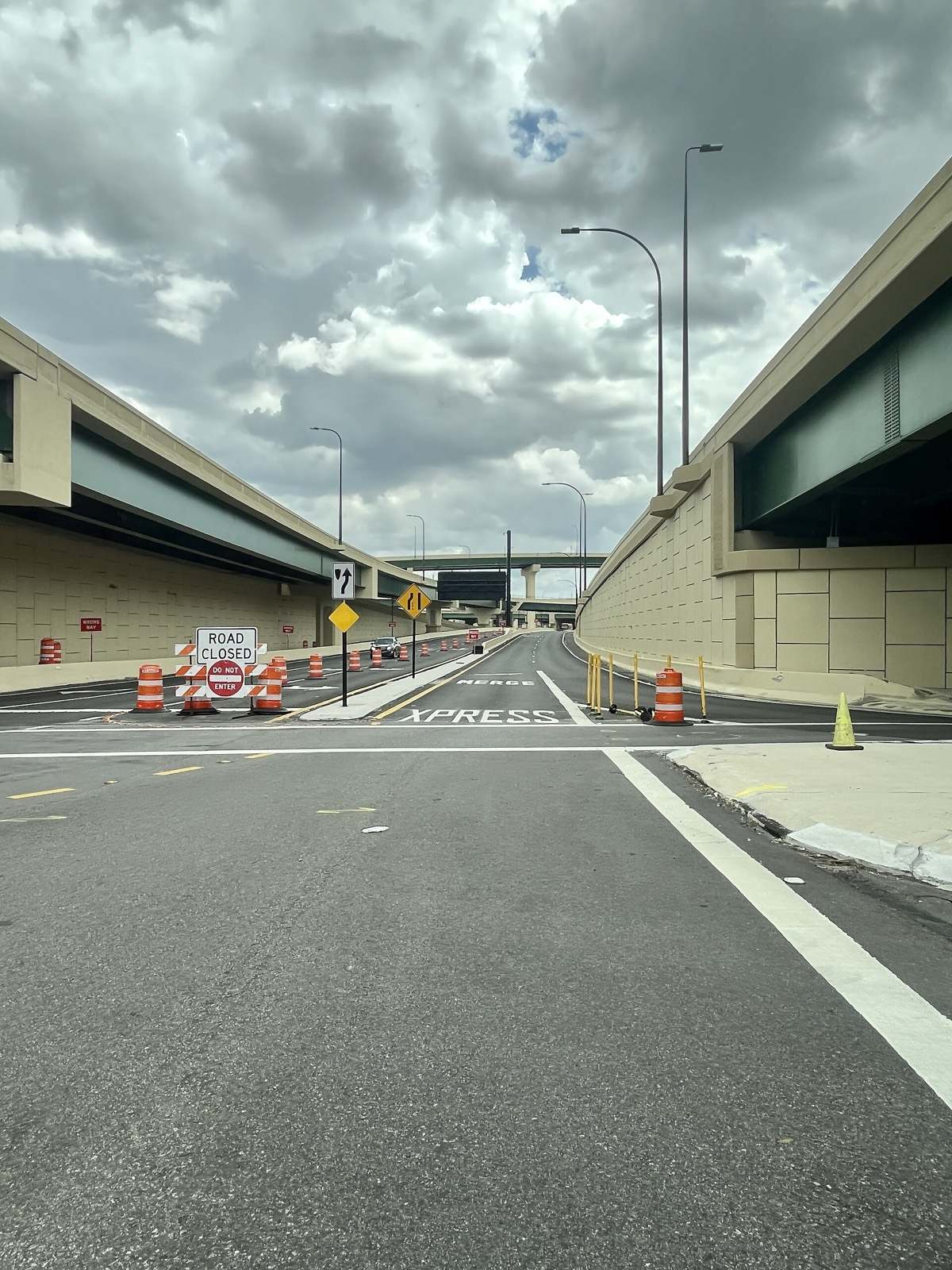
What if I break down in the I-4 Express lanes in Orlando?

Stay in the car, keep the belt on, turn on the hazards and call for help. The Express lanes have no safe place to stand outside the vehicle. Tell the operator you are in the Express lanes and name the last entry or exit you passed.

The I-4 Express lanes were added during the I-4 Ultimate rebuild and run in the middle of the highway, separated from the general lanes. That layout means help reaches you through the managed lane rather than from the side, so the operator needs to know you are in the Express lanes and not on the regular shoulder. Say which direction you are headed, the last place you could have entered or exited, and the nearest mile marker or overpass name you can see. Do not step out and try to walk to the regular lanes. Road Rangers patrol the Express lanes and can be reached by dialing *347. If you are blocking a lane or there is any injury, go to 911. A paid roadside truck may have limits on what it can reach in the managed lane, so ask about that on the call.

What should I do if I break down on a toll road like SR 408, 417, 429 or 528 in Orlando?

Pull onto the shoulder, turn on the hazards, stay in the car and call. The Central Florida toll roads are run by CFX, and the same rules apply as on I-4. Say which road, which direction and the last exit.

SR 408, SR 417, SR 429 and SR 528 all have shoulders and exit signs that make a location easy to give. Start with the road and direction, then the last exit you passed or the next one ahead. Mile markers help, and so do overpass names such as Kirkman Road, Semoran Boulevard or the Orange Blossom Trail. CFX posts a roadside assistance number, and the Road Rangers program covers the toll roads during its posted hours. After hours, or when you would rather have a truck that stays with the repair, a paid roadside line can take the call. Tell the operator the road is a toll road, because that changes how the truck gets to you.

Do I still pay the toll if my car broke down on an Orlando toll road?

Yes. E-PASS and SunPass tolls still post if you drive through a toll point, and a breakdown does not cancel them. Toll roads here use cashless tolling. A tow or service truck entering the road is a separate matter for the operator to explain.

A breakdown on SR 408, 417, 429, 528 or 414 does not change how tolls are charged. If your car passed under a gantry before it died, that toll is recorded as usual, whether the transponder is E-PASS or SunPass. If you have no transponder, the system reads the plate and bills the registered owner. If you tow or restart and continue, you will pass more gantries, and each posts a toll. A roadside truck that enters the toll road to reach you may also pass gantries, and the operator can tell you on the call whether that affects your quote. Keep your own receipts and notes about where the car stopped, in case you want to ask the toll authority about a charge. For anything about a specific toll bill, the toll road operator is the right place to ask.

What are Road Rangers in Orlando, and when should I call a paid roadside line instead?

Road Rangers are FDOT's roadside patrol. Dial *347 and they help at no charge with limited services. They can change a tire, add some gas, make minor fixes or move a car to a safer spot. They cover highways and toll roads, not driveways or garages.

FDOT's Road Rangers patrol I-4, the Express lanes, the CFX toll roads and Florida's Turnpike. They are a good first call on those roads. On the CFX toll roads they work set hours, which CFX posts on its roadside assistance page, usually daytime into the evening. They do not come to driveways, parking garages, parking lots or side streets, and they offer a short list of services. A paid roadside line fits when it is outside those hours, when you are somewhere the patrol does not go, when you have a tire a Ranger cannot plug, or when you need a jump or a lockout opened. It also fits when you want a truck that can stay and finish the job. Either way, if the car is in a lane or someone is hurt, 911 comes first.

What is Florida's Move Over law, and how does it affect me on I-4?

Since January 1, 2024, drivers must move over a lane or slow to 20 mph below the limit for a disabled vehicle with hazard lights on. The rule used to cover emergency and service vehicles. It now covers cars like yours.

Florida's Move Over law protects anyone stopped on the roadside with hazards flashing, including a regular car with a flat. Other drivers should change lanes away from you when they can do so safely, or slow to 20 mph under the posted limit when they cannot. Not every driver remembers it, so the hazards, the belt and the wait inside the car still matter. If you are changing a tire on the shoulder, which a Road Ranger or a roadside truck will do with their own warning lights, stay on the side away from the lane. If you have a passenger, keep them in the vehicle too. The FLHSMV page linked below explains the law in plain language and is worth reading once.

What do summer storms and standing water change about an I-4 breakdown in Orlando?

They make every step slower and riskier. Stay in the car, keep the hazards on, and do not open a door into moving traffic or standing water. Afternoon thunderstorms can drop visibility to a few car lengths.

From June through September, Orlando gets heavy thunderstorms almost every afternoon, and they sit right over I-4 at rush hour. Visibility drops, brake lights blur and hydroplaning is common. If the car dies in rain, keep the hazards on and wait for the worst of it to pass before you step out, unless there is a safety reason to leave. Standing water at the edge of the shoulder can hide a drop, and grass swales go soft. A tire change in a downpour is slower and riskier than the same change at noon in dry weather, so tell the operator about the rain when you call. Hurricane season runs June to November, and watch FL511 for closures and flooding before you travel. Heat bakes batteries and tires too, which is why a summer breakdown is often a flat or a dead battery.

What do I tell the operator when I call from an Orlando highway?

Give the road, the direction you are traveling and the last exit or mile marker you passed. Then add the make, model and year, what the car did when it stopped, and whether it is on the shoulder or in a lane.

A clear location gets a truck to you sooner than a long story. A good report sounds like "I-4 eastbound, past the Kirkman Road exit, on the right shoulder." If you are on SR 408, 417, 429 or 528, name that road and the exit. If you have no signs in view, read the mile marker or the nearest overpass. Then describe the problem in a sentence: a flat tire, a dead battery, no fuel, or a car that will not start. For a tire, say which wheel and whether there is a spare, and text a photo if you can. The operator will tell you the quote, when a truck can reach you, and what to expect. Keep your phone charged and your hazards on, and stay in the car until help arrives.

An access ramp to the I-4 Express lanes in Orlando under storm clouds, with orange barrels
The ramp to the I-4 Express lanes in Orlando in 2023, under the afternoon clouds that bring the summer storms.

Where's the car?

Fill in the ticket and tap send. It goes to the local operator, who calls you back on the number you give. In a hurry? Call (407) 241-2139 instead.

On a highway, tap the road and your direction, then add the last exit or a cross street. That is enough for the operator to find you.

(407)241-2139

Breakdown ticketOrlando, FL

On a highway? Tap the road, then the direction
Call (407) 241-2139Text